Comparison of two methods for isolating Campylobacter species in stool samples from children with diarrhea in Lima, Peru
DOI:
https://doi.org/10.58597/rpe.v4i3.121Keywords:
Campylobacter, Campylobacter Infections, Culture Techniques, Microbiology, PediatricsAbstract
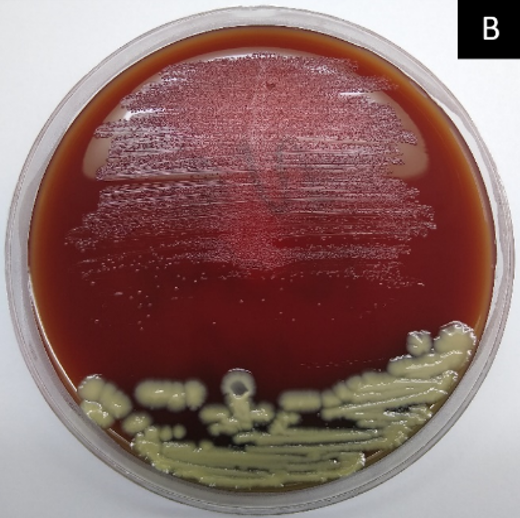
Objective: To compare the isolation capacity of Campylobacter species using the combined methodology versus the direct methodology in stool samples from children with diarrhea at the National Institute of Child Health in Lima, Peru, 2024. Materials and methods: Observational, comparative, and retrospective study. Two hundred stool samples from children with diarrhea were processed and cultured, by using a combined methodology and a direct methodology (selective medium culture) for the isolation of Campylobacter species. The data were analyzed using bivariate statistics. Results: The samples analyzed were predominantly from males (78%) and mainly from emergency services. Nine Campylobacter species were isolated, representing 35% of enteric pathogens. The proposed combined methodology achieved a sensitivity of 88.9% and a specificity of 99.5%. Interrupted Gram staining was also evaluated for the microscopic detection of Campylobacter, achieving a sensitivity of 66.7% and a specificity of 97.4%. The distributions of the isolated species were 7 (78%) for Campylobacter jejuni and 2 (22%) for Campylobacter coli. Conclusions: The use of the combined methodology performs well for the isolation of Campylobacter species, allowing a greater number of isolated colonies to be obtained that can satisfy identification and susceptibility testing requirements, without the need for subsequent re-isolation and the consequent delay in laboratory results.
Downloads
References
Backert S. Fighting Campylobacter Infections: Towards a One Health Approach. Springer Nature; 2021. 21 p.
Strakova N, Korena K, Gelbicova T, Kulich P, Karpiskova R. A Rapid Culture Method for the Detection of Campylobacter from Water Environments. Int J Environ Res Public Health. 2021;18(11):6098. doi: 10.3390/ijerph18116098.
Hagos Y, Gugsa G, Awol N, Ahmed M, Tsegaye Y, Abebe N, et al. Isolation, identification, and antimicrobial susceptibility pattern of Campylobacter jejuni and Campylobacter coli from cattle, goat, and chicken meats in Mekelle, Ethiopia. PLoS One. 2021;16(2):e0246755. doi: 10.1371/journal.pone.0246755.
Schreyer ME, Olivero CR, Rossler E, Soto LP, Frizzo LS, Zimmermann JA, Signorini ML, Virginia ZM. Prevalence and antimicrobial resistance of Campylobacter jejuni and C. coli identified in a slaughterhouse in Argentina. Curr Res Food Sci. 2022;5:590-597. doi: 10.1016/j.crfs.2022.03.005.
Tilmanne A, Kandet Yattara HM, Herpol M, Vlaes L, Retore P, Quach C, Vandenberg O, Hallin M, Martiny D. Multi-step optimization of the filtration method for the isolation of Campylobacter species from stool samples. Eur J Clin Microbiol Infect Dis. 2019;38(5):859-864. doi: 10.1007/s10096-019-03479-1.
Baserisalehi M, Bahador N, Kapadnis BP. A novel method for isolation of Campylobacter spp. from environmental samples, involving sample processing, and blood- and antibiotic-free medium. J Appl Microbiol. 2004;97(4):853-60. doi: 10.1111/j.1365-2672.2004.02375.x.
Steele TW, McDermott SN. The use of membrane filters applied directly to the surface of agar plates for the isolation of Campylobacter jejuni from feces. Pathology. 1984;16(3):263-5. doi: 10.3109/00313028409068535.
Nielsen HL, Engberg J, Ejlertsen T, Nielsen H. Comparison of polycarbonate and cellulose acetate membrane filters for isolation of Campylobacter concisus from stool samples. Diagn Microbiol Infect Dis. 2013;76(4):549-50. doi: 10.1016/j.diagmicrobio.2013.05.002.
Karmali MA, Fleming PC. Application of the Fortner principle to isolation of Campylobacter from stools. J Clin Microbiol. 1979 Aug;10(2):245-7. doi: 10.1128/jcm.10.2.245-247.1979.
Zerpa R, Flores W, Uchima N, (2004). (4-9 de noviembre de 1984). Método práctico y de bajo costo para el cultivo de Campylobacter jejuni. 6° Congreso Peruano de Microbiología y Parasitología, Cusco-Perú. 6° Congr Peru Microbiol Parasitol Cusco-Perú. 1984
Nielsen HL, Ejlertsen T, Nielsen H. Polycarbonate filtration technique is noninferior to mCCDA for isolation of Campylobacter species from stool samples. Diagn Microbiol Infect Dis. 2015;83(1):11-2. doi: 10.1016/j.diagmicrobio.2015.05.008.
Chang H, Guo J, Wei Z, Huang Z, Wang C, Qiu Y, Xu X, Zeng M. Aetiology of acute diarrhoea in children in Shanghai, 2015-2018. PLoS One. 2021;16(4):e0249888. doi: 10.1371/journal.pone.0249888.
Benoit SR, Lopez B, Arvelo W, Henao O, Parsons MB, Reyes L, Moir JC, Lindblade K. Burden of laboratory-confirmed Campylobacter infections in Guatemala 2008-2012: results from a facility-based surveillance system. J Epidemiol Glob Health. 2014;4(1):51-9. doi: 10.1016/j.jegh.2013.10.001.
Samie A, Moropeng RC, Tanih NF, Dillingham R, Guerrant R, Bessong PO. Epidemiology of Campylobacter infections among children of 0-24 months of age in South Africa. Arch Public Health. 2022;80(1):107. doi: 10.1186/s13690-022-00850-1.
Mero S, Timonen S, Lääveri T, Løfberg S, Kirveskari J, Ursing J, et al. Prevalence of diarrhoeal pathogens among children under five years of age with and without diarrhoea in Guinea-Bissau. PLoS Negl Trop Dis. 2021;15(9):e0009709. doi: 10.1371/journal.pntd.0009709.
Moya-Salazar J, Pio-Dávila L, Terán-Vásquez A, Olivo-López J. Rendimiento diagnóstico del agar sangre con filtro versus agar karmali para el diagnóstico de Campylobacter en coprocultivo. Horiz Méd. 2016;16(3):58-65. Disponible en: http://www.scielo.org.pe/scielo.php?pid=S1727-558X2016000300009&script=sci_abstract
Fitzgerald C, Nachamkin I. 2015. Campylobacter and Arcobacter, p 933–946. In Murray PR, Baron EJ, Jorgensen JH, Landry ML, Pfaller MA (ed), Manual of Clinical Microbiology, 10th ed, vol 1. ASM Press, Washington, DC.
Park CH, Hixon DL, Polhemus AS, Ferguson CB, Hall SL, Risheim CC, et al. A rapid diagnosis of Campylobacter enteritis by direct smear examination. Am J Clin Pathol. 1983;80(3):388-90. doi: 10.1093/ajcp/80.3.388.
Sainato R, ElGendy A, Poly F, Kuroiwa J, Guerry P, Riddle MS, Porter CK. Epidemiology of Campylobacter Infections among Children in Egypt. Am J Trop Med Hyg. 2018;98(2):581-585. doi: 10.4269/ajtmh.17-0469.
Pollett S, Rocha C, Zerpa R, Patiño L, Valencia A, Camiña M, et al. Campylobacter antimicrobial resistance in Peru: a ten-year observational study. BMC Infect Dis. 2012;12:193. doi: 10.1186/1471-2334-12-193.
Lake IR, Colón-González FJ, Takkinen J, Rossi M, Sudre B, Dias JG, et al. Exploring Campylobacter seasonality across Europe using The European Surveillance System (TESSy), 2008 to 2016. Euro Surveill. 2019;24(13):1800028. doi: 10.2807/1560-7917.ES.2019.24.13.180028.
Downloads
Published
Issue
Section
License
Copyright (c) 2025 Roberto Eugenio Rojas-León, Lilian Patiño-Gabriel, María del Carmen Quispe-Manco , Elsa Ore-Barrera, Raúl Honorio Vicuña-Osorio, Mariana Ruth Palma Santa-Cruz

This work is licensed under a Creative Commons Attribution 4.0 International License.